

RenaissanceRe
SYSTEMS & INTEGRATIONS EVALUATION · DOCUMENT STORAGE
Turning complex systems into a clearer path forward.
- SYSTEMS ARCHITECTURE
- INTEGRATION STRATEGY
- BUSINESS PROCESS ANALYSIS
- DOCUMENT MANAGEMENT
- Role
- BUSINESS ANALYST
- Duration
- MAY 2024 — AUGUST 2024
- Business areas
- POLICY & CLAIMS · FINANCE
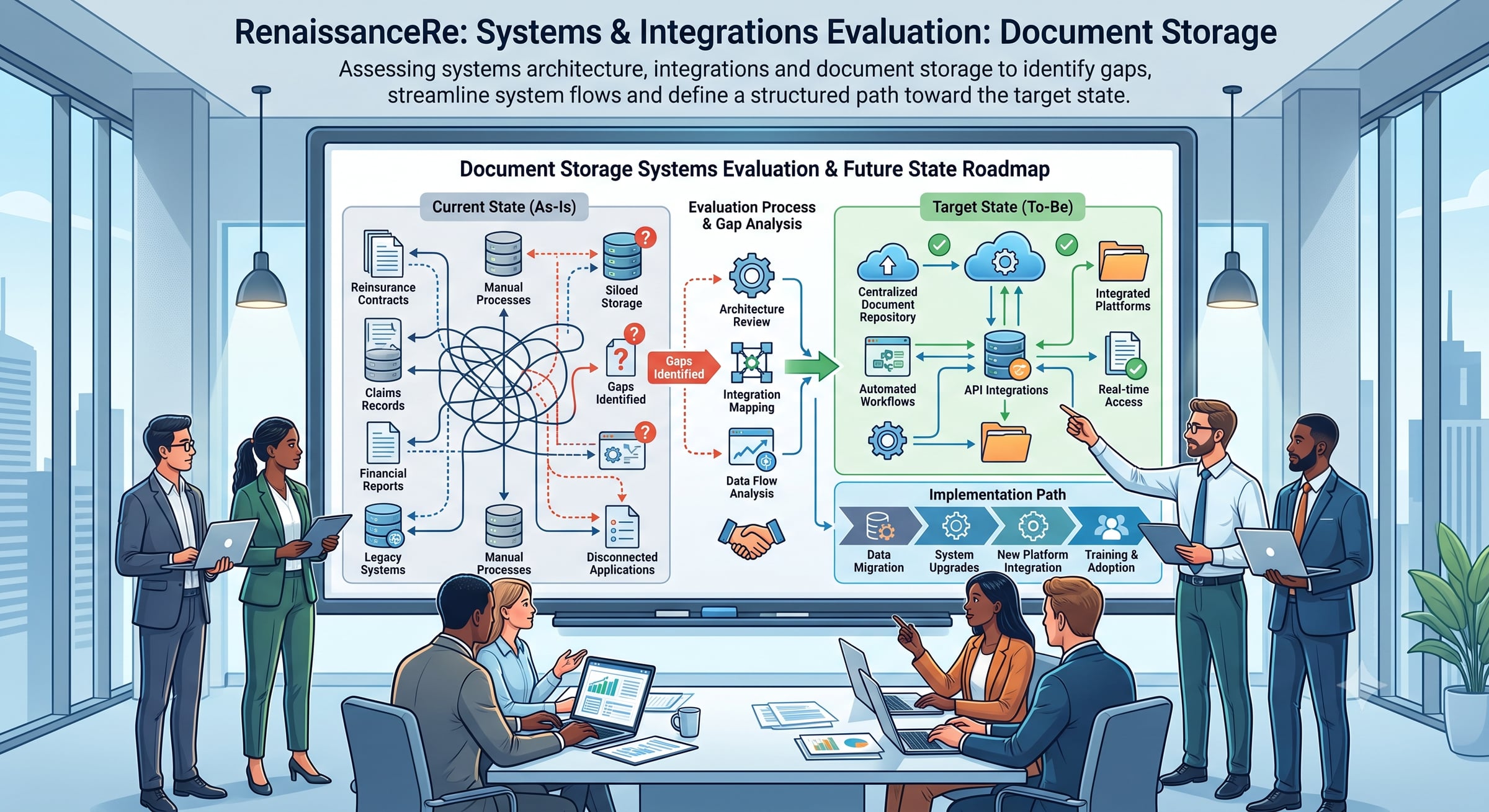
We assessed the existing systems, integrations, business processes, and document-storage landscape to identify gaps, rationalise redundant integrations, and establish a structured direction towards the target state.
- Client
- RenaissanceRe
- Role
- Business Analyst
- Duration
- May 2024 — August 2024
- Business areas
- Policy & Claims, Finance
- Tools
- ImageRight, IT Infrastructure, System Architectures, MS Office, Microsoft Excel
Systems & integration evaluation
Creating clarity across a complex technology landscape
We worked with RenaissanceRe to evaluate its existing systems, integrations, business processes, and document-storage environment, with the objective of identifying structural gaps and establishing a clearer path towards the target state.
The engagement focused on understanding how the existing technology landscape operated end-to-end — from business processes and system interactions to integration dependencies and document management.
From current state to execution plan
- 01Current state
- 02Assessment
- 03Gap identification
- 04Recommendations
- 05Target objectives
- 06Execution plan
The challenge
Complexity across processes, data flows and dependencies
As enterprise environments evolve, systems and integrations can become increasingly interconnected, creating complexity across processes, data flows, and technology dependencies.
Our assessment focused on understanding the existing landscape in detail and identifying:
- 01Gaps and limitations within the current architecture
- 02Integration dependencies and redundant interfaces
- 03Inefficiencies within existing system flows
- 04Challenges within document-storage processes
- 05Opportunities to simplify and rationalise the technology landscape
- 06A structured path towards the desired target state
Our approach
How we worked through the problem
We took a structured, end-to-end approach to the assessment.
We analysed the current-state architecture, mapped business and system process flows, reviewed integration points, and evaluated the existing document-storage platform.
Working closely with business stakeholders, technology teams, and third-party vendors, we developed a comprehensive understanding of the existing environment and the dependencies connecting its various components.
This enabled us to move beyond individual system issues and assess the broader ecosystem as an interconnected technology landscape.
- 01
Assessed the existing systems and integrations
A full-scale assessment of integrations and IT system architectures, including performance pitfalls.
- 02
Mapped current-state architecture and business process flows
Current process flows documented for document production across Policy & Claims and Finance.
- 03
Analysed integration dependencies and data flows
How documents and data move between business areas, systems and integrations.
- 04
Evaluated the document-storage platform
A deep evaluation of ImageRight to identify issues and gaps.
- 05
Identified gaps, redundancies and improvement opportunities
Including redundant integrations documented as candidates for decommissioning.
- 06
Worked with internal stakeholders and third-party vendors
Onshore and offshore vendor teams coordinated to complete the assessment.
- 07
Defined a structured target-state direction
Recommendations with a plan of action and order of sequence for execution.
What we worked on
We worked across the entire landscape.
This was not simply a systems review.We looked at how the pieces connected.
From business processes and system architecture to integrations, document storage, and third-party dependencies, we examined the environment end-to-end to understand where complexity existed and where meaningful improvements could be made.
- 01
Assess
We evaluated the existing architecture, systems, integrations, workflows, and document-storage environment.
- 02
Understand
We mapped dependencies and analysed how systems and processes interacted across the wider landscape.
- 03
Identify
We surfaced architectural gaps, integration redundancies, process inefficiencies, and areas requiring improvement.
- 04
Define
We translated our findings into practical recommendations and a structured direction for the target state.
- 05
Enable
We established a sequenced path forward, giving stakeholders a clearer foundation for future transformation.
Areas in scope
- 01
System Architecture
Our team assessed how the existing IT systems fit together and where the architecture fell short.
- 02
Integrations
We analysed the interfaces between systems, identifying shortcomings and redundant integrations.
- 03
Process Flows
We documented current process flows for document production across Policy & Claims and Finance.
- 04
IT Infrastructure
We assessed the IT infrastructure underpinning the systems in scope.
- 05
Document Storage
We evaluated document production and storage in ImageRight, identifying issues and gaps.
- 06
Performance
We identified performance pitfalls affecting day-to-day system use.
Architecture
A conceptual view of the landscape in scope
Business areas
- Policy & Claims
- Finance
Business processes
- Document Production
- Process Flows
Systems
- ImageRight
- Existing IT Systems
Integrations
- Existing Integration Landscape
Infrastructure
- IT Infrastructure
Conceptual representation of assessment scope. Not a depiction of the client's actual systems.
Gap analysis
Identifying what stood in the way
Existing architecture, integrations and processes were assessed to identify gaps, shortcomings and opportunities for improvement.
- 5
01 — Current state
What exists
- Existing Architecture
- Existing Integrations
- Existing Processes
- ImageRight
- Document Production
- 5
02 — Gaps & shortcomings
What was identified
- Architecture Gaps
- Integration Shortcomings
- Process Improvement Opportunities
- Redundant Integrations
- System Issues
- 3
03 — Path forward
What was recommended
- Improvement Areas
- Integration Streamlining
- System Flow Improvements
Conceptual representation of assessment scope. Not a depiction of the client's actual systems.
Deep dive
ImageRight
Document storage platform assessment
The project included a deep evaluation of ImageRight to identify issues, gaps and improvement opportunities.
- Document production
- Document storage
- Integrations
- Performance

- 01
Issues
System issues and performance pitfalls affecting how documents are stored and retrieved were identified and documented.
- 02
Gaps
Gaps between ImageRight, document production and the wider integration landscape were assessed across Policy & Claims and Finance.
- 03
Improvement Opportunities
Opportunities to improve and streamline document flows were captured as input to the recommendations.
Process flow
How work and documents move
- 01Business Area
- 02Process
- 03Document Creation
- 04Document Storage
- 05System / Integration
- 06Output
Conceptual representation of assessment scope. Not a depiction of the client's actual systems.
Solution & target state
Defining the path forward
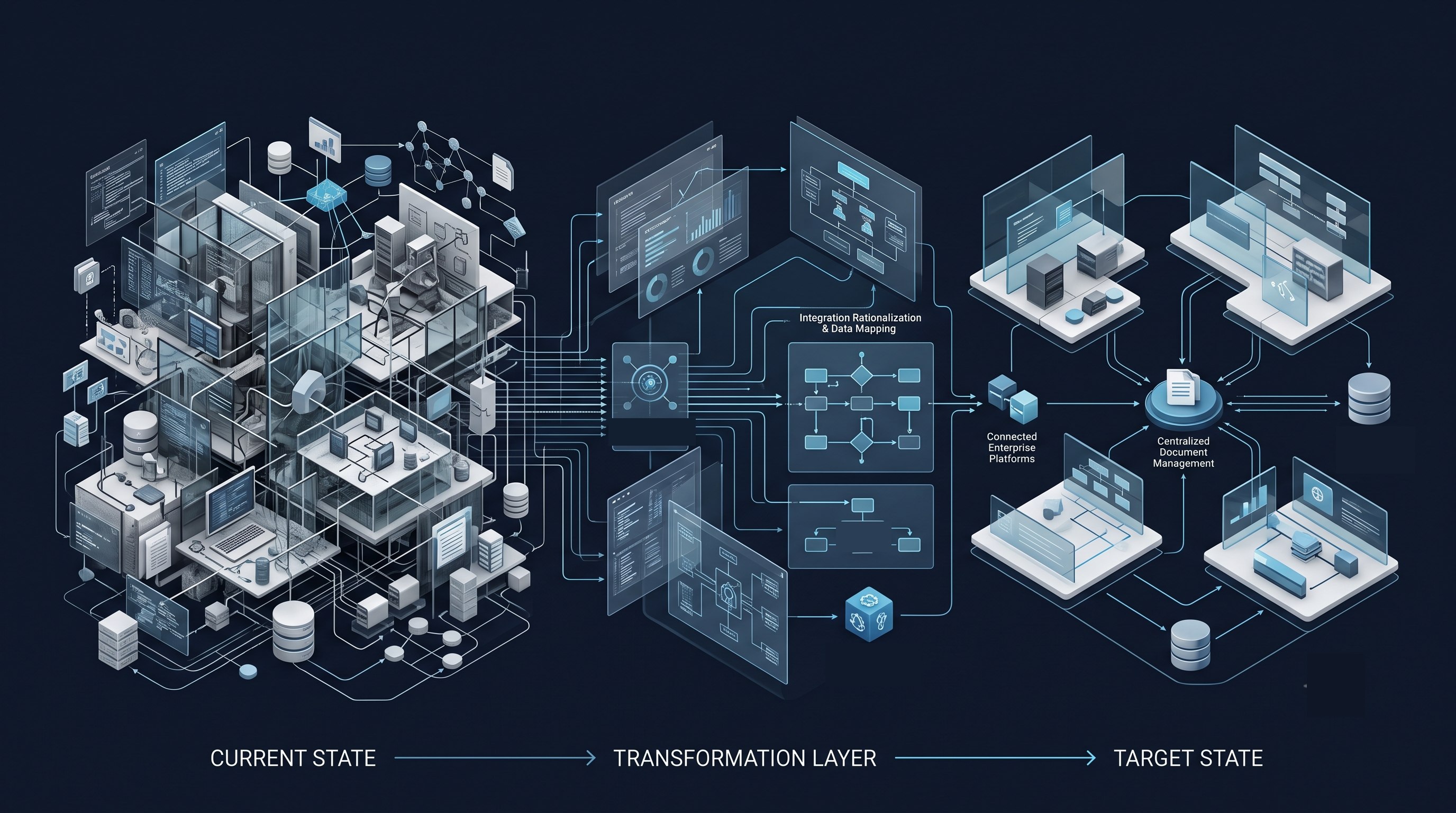
Rather than stopping at assessment, we established a structured plan for progressing towards the target state.
The recommendations covered
- 01
Architecture
A clearer understanding of the existing architecture and areas requiring change.
- 02
Integrations
Identification of redundant or inefficient integration points and opportunities for rationalisation.
- 03
Document Management
Detailed assessment of the existing document-storage environment and associated gaps.
- 04
Business Processes
Documentation and analysis of current workflows to identify opportunities for improvement.
- 05
Transformation Roadmap
A sequenced plan of action to help stakeholders move from the current state towards the desired future state.
Recommendations
Identify. Improve. Streamline.
Redundant integrations were identified and documented as opportunities for decommissioning, as part of the recommended path to the target state.
- 01
Identify
Areas for improvement across architecture, integrations and process flows.
- 02
Improve
Recommendations to address system issues and architecture gaps.
- 03
Streamline
Simpler system flows with fewer hand-offs between applications.
- 04
Decommission
Redundant integrations documented as candidates for decommissioning.
- 05
Target State
A clear picture of the target objectives the business is working towards.
Execution roadmap
A plan of action and order of sequence
- 01Plan of action
- 02Prioritise
- 03Sequence
- 04Execute
- 05Achieve target objectives
Third-party collaboration
Coordinating across vendors and teams
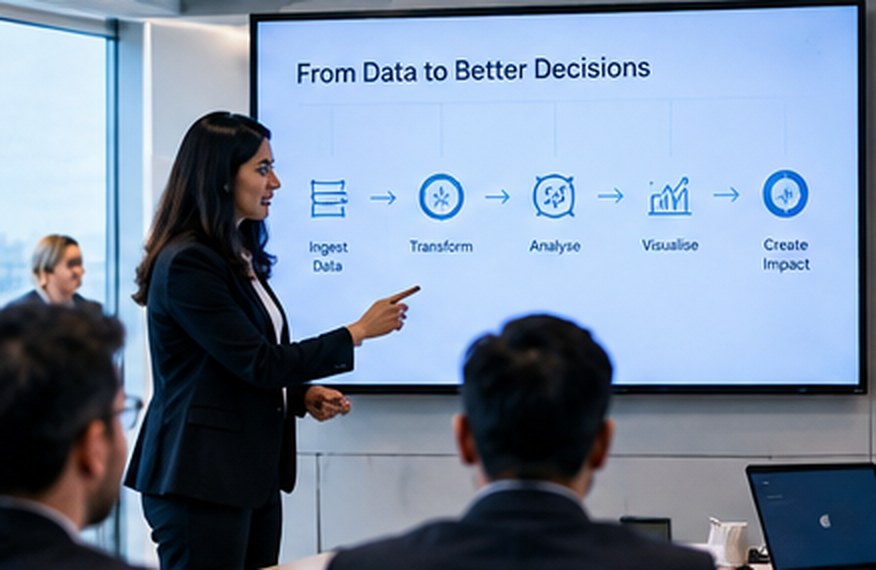
The role involved coordinating multiple third-party vendors across onshore and offshore teams.
Contributor
Business areas
Policy & Claims and Finance teams provided the business context and current process knowledge.
Coordinating role
Business Analyst
Coordinated the assessment, documented process flows and consolidated findings into recommendations.
Contributor
Third-party vendors
Onshore and offshore vendor teams contributed system and integration knowledge.
How findings came together
- 01Business Areas
- 02Business Analyst
- 03Third-Party Vendors
- 04Assessment
- 05Findings
- 06Recommendations
Deliverables
What we delivered
- 1. Current-state systems and architecture assessment
- 2. Business and system process-flow documentation
- 3. Integration landscape assessment
- 4. Document-storage platform evaluation
- 5. Gap and dependency analysis
- 6. Identification of redundant integrations
- 7. Improvement and rationalisation recommendations
- 8. Target-state direction
- 9. Structured execution sequence for future improvements
Our role
A bridge between business and technology
We acted as a bridge between business, technology, architecture, and third-party stakeholders — bringing together business requirements, technical analysis, process understanding, and architectural thinking to turn a complex technology environment into an actionable transformation direction.
- 01
Full-scale assessment
Assessment of integrations, IT system architectures, process flows and performance pitfalls.
- 02
Process documentation
Documentation of current process flow diagrams for relevant business areas.
- 03
ImageRight evaluation
Deep evaluation of ImageRight to identify issues and gaps.
- 04
Stakeholder coordination
Coordination with multiple third-party vendors across onshore and offshore teams.
The business analyst story
From complexity to clarity
Our work transformed a complex set of systems, integrations, and processes into a clearer view of the current environment.
We documented the existing flows, highlighted areas requiring attention, and identified opportunities to streamline the architecture by addressing unnecessary or redundant integrations.
The findings were translated into practical recommendations designed to improve system flows and provide a more structured foundation for future transformation.
- 01Understand
- 02Analyse
- 03Map
- 04Identify
- 05Recommend
- 06Plan
Systems thinking
Business analysis connects the whole picture
No system works in isolation. The assessment looked at how business areas, applications, integrations, processes and documents depend on each other, so that each recommendation improved the whole flow rather than one part of it.
- Business
- Policy & Claims and Finance needs set the priorities.
- Systems
- Applications assessed for gaps, issues and fit.
- Integrations
- Interfaces mapped to find redundancy and shortcomings.
- Processes
- Process flows traced end to end across teams.
- Documents
- Document production and ImageRight storage reviewed together.
Conceptual representation of assessment scope. Not a depiction of the client's actual systems.

A shared starting point
One structured view of architecture, integrations and document storage.
Current process flows were documented for Policy & Claims and Finance, giving business and technology teams a shared starting point for the recommendations and execution sequence.
Final impact
From Assessment to Action
The assessment translated complex findings into a practical improvement strategy. We identified integrations that were candidates for streamlining or decommissioning, documented opportunities for improvement, and defined a structured sequence of actions to move towards the desired target state.
- 01Assess
- 02Identify
- 03Document
- 04Recommend
- 05Sequence
The result
The engagement gave stakeholders a consolidated view of their technology and integration landscape and a clearer understanding of where improvements could be made.
By connecting architecture, integrations, business processes, and document management into a single assessment, we created a structured foundation for simplifying system flows and progressing towards the target state.
Let’s Build What’s Next.
Speak with J & J Consulting about technology, talent, consulting or training.